
 DeepSeek: WG21 Is “Structurally Strained”The AI OpinionMy Very Best AI Slop
C++ Blogs, the last 7 days
Thursday, October 22, 2026
DeepSeek: WG21 Is “Structurally Strained”The AI OpinionMy Very Best AI SlopIf this page is useful, please consider donating a coffee
Wednesday, October 21, 2026
 Microsoft CppCon 2026 Trip ReportCppCon 2026 is a wrap! Microsoft returned to Aurora, Colorado, for a week of talks, technical discussions, and conversations with developers from across the C++ community. Microsoft C++ @ CppCon At our booth, we met people building games, financial systems, developer tools, embedded software, scientific tools, and other applications. Some were working with the latest […] The post Microsoft CppCon 2026 Trip Report appeared first on C++ Team Blog .C++ Team Blog
 How Long Until Modern C++ Is Just C++?Ask Fortran.My Very Best AI Slop
 Why didn’t we use RoRegisterForApartmentShutdown to clean up the unmarshalable delegate?Too many requirements, some of which bring us full circle. The post Why didn’t we use RoRegisterForApartmentShutdown to clean up the unmarshalable delegate? appeared first on The Old New Thing .The Old New Thing
 Security advisory: CVE-2026-96432 - Null pointer dereference vulnerability in QNetworkAccessManager impacts QtA null pointer dereference vulnerability in the Qt QNetworkAccessManager class of the Qt Network module has been discovered and has been assigned the CVE id CVE-2026-96432.Qt BlogSecurity advisory: CVE-2026-105923 - Null-pointer dereference in QTriangulator reachable through VectorImageA denial-of-service vulnerability in the Qt Framework VectorImage QML type of the Qt Quick Vector Image module has been discovered and has been assigned the CVE id CVE-2026-105923. Affected versions: from Qt 6.8.0 to Qt 6.8.8, from Qt 6.9.0 to Qt 6.11.2 Impact: Processing specially crafted SVG content with the VectorImage QML type can cause the application to crash, resulting in loss of availability. CVSS 4.0 Score: 4.0 / MEDIUM Vector String: CVSS:4.0/AV:L/AC:L/AT:N/PR:N/UI:A/VC:N/VI:N/VA:H/SC:N/SI:N/SA:N/E:U/AU:N/R:U/RE:L/U:Green Mitigation: Do not load untrusted SVG files with the VectorImage QML type. Solution: Apply the following patch or update to Qt 6.8.9, Qt 6.11.3 or Qt 6.12.0 or later. Patches: dev: https://codereview.qt-project.org/c/qt%2Fqtbase/+/762279Qt Blog
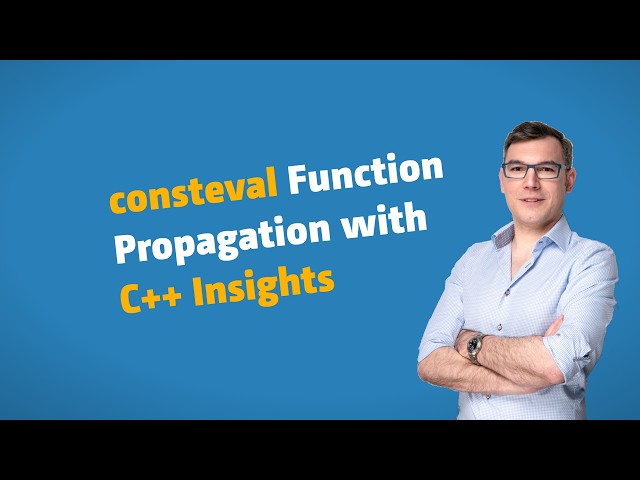 C++ Insights Episode 79: consteval Function Propagation with C++ InsightsI published a new C++ insights episode: consteval Function Propagation with C++ Insights. In this episode, you'll learn about C++23s change to consteval functions and how C++ Insights helps you see that. AndreasAndreasFertig.com
Tuesday, October 20, 2026
 C++26 Ranges: Better InfrastructureC++26 ranges isn’t only about new view adaptors. Three changes landed that don’t give you new ways to compose pipelines but fix real problems: containers can now reserve space for lazy ranges that don’t know their exact size, finally works with ranges, and ranges::to no longer forces you into a | pipeline when a simple function call would do. approximately_sized_range and rese...Sandor Dargo's Blog
 AMR Contour and Interface support in VTK and ParaViewAdaptive Mesh Refinement (AMR) is a popular method of numerical simulation used to adapt the accuracy of the simulation, which produces volumes of data of different levels of detail. While this can be achieved using an unstructured grid, using a dedicated data model is preferred as it improves computation speed and memory usage.Kitware IncMicrospeak: Drain the slide, back-up slidesPowerPoint presentation jargon. The post Microspeak: Drain the slide, back-up slides appeared first on The Old New Thing .The Old New Thing
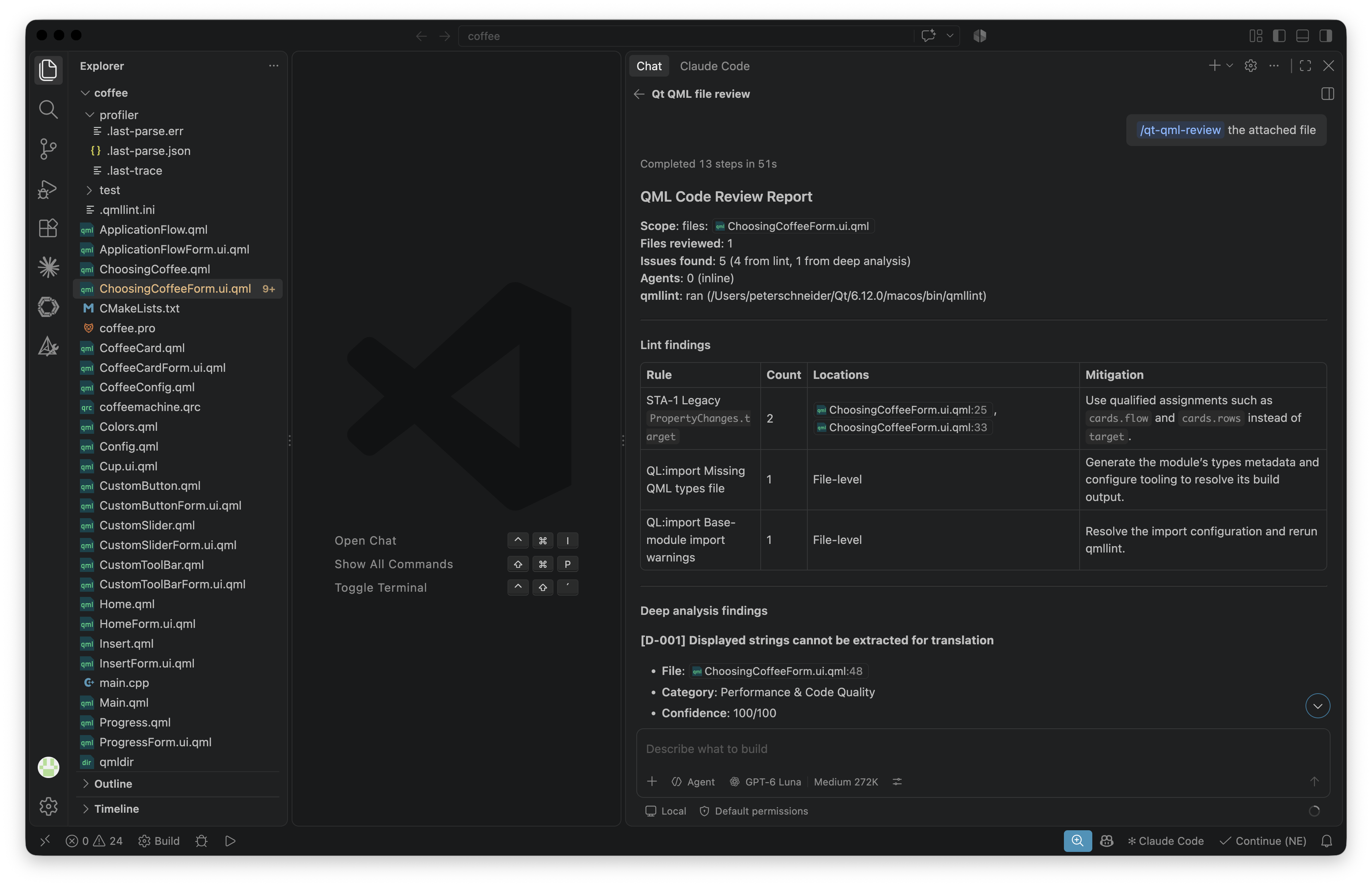 Updated Qt Code Review Skills Reduce Token Costs by Up To 75%Whether you are reviewing Qt Quick or Qt Widget code with Qt’s agentic skills, you can reduce your token consumption significantly by upgrading to the latest versions while getting the same review quality.Qt BlogSecurity advisory: CVE-2026-101201 Out-of-bounds read vulnerability in JSON document parsing functionality impacts Qt Core and Qt 5 Core Compatibility APIsAn out-of-bounds read vulnerability in the JSON document parsing functionality (QJsonDocument) of the Qt Core module and the Qt 5 Core Compatibility APIs module (QBinaryJson) has been discovered and has been assigned the CVE id CVE-2026-101201.Qt Blog
 What makes a game tick? Part 9.5 - The Curse of the Scheduler LatencyLet's talk about game simulations. Today I bring up a slightly more advanced topic and talk about OS scheduler latency and its impact on multi-threaded tick design.Mathieu Ropert
Monday, October 19, 2026
Qt Creator 21 - CMake ChangesHere are the new CMake changes in Qt Creator 21:Qt Blog Conference on Applied Machine Learning in Information Security (CAMLIS) 2026Join Kitware at CAMLIS 2026, where our team will present research on aligning autonomous cyber defense agents with different security objectives. Learn more about our work in artificial intelligence, machine learning, and cybersecurity, and connect with our team to discuss technical challenges and opportunities for collaboration.Kitware IncWhy do we need ud2 when int 6 is right there?An interrupt is not a fault. The post Why do we need ud2 when int 6 is right there? appeared first on The Old New Thing .The Old New ThingSecurity advisory: CVE-2026-8168 Denial-of-service vulnerability in the SVG parser and renderer impacts QtA denial-of-service vulnerability in the parser and renderer of the Qt SVG module (QtSvg) has been discovered and has been assigned the CVE id CVE-2026-8168.Qt Blog
Sunday, October 18, 2026
 Composite objects and C++26 the std::polymorphic typeIn a previous article, I discussed the C++ std::indirect type and how it helps implementing the PImpl idiom. However, the std::indirect type was inducted in the standard alongside another type called std::polymorphic. This helps implementing composite classes, where composite means a class composed of member objects in an has-a relation, where the composite own the ... Read more The post Composite objects and C++26 the std::polymorphic type first appeared on Marius Bancila's Blog .Marius Bancila's Blog
 The Problem with C++ Safety (Part 1): Why “It Works” Isn’t Good EnoughRainer Grimm’s blog continues. In this first article of a new series, Klaus Iglberger looks at why C++ is called memory unsafe and argues that the real problem isn’t the language itself, but how we write and teach it.MC++ BLOG
Saturday, October 17, 2026
 Decoding base64 in Python at 10 gigabytes per secondWe sometimes need to convert binary data to text. For example, your emails must be stored as text files. Naïvely, you could just use a string of 0 and 1, but it would mean using one character per bit. We can do better by using 64 ASCII characters: all letters, all numbers, plus a few … Continue reading Decoding base64 in Python at 10 gigabytes per secondDaniel Lemire's blog
 _Paradise Lost_, diffedOne of my book clubs will be starting Milton's _Paradise Lost_ soon. Preparing for that reading, I learned that there are actually two different versions of _Paradise Lost_: the “original” 1667 edition in ten books, and the 1674 revised edition in twelve. Are the differences between the two editions as significant as, say, the differences between the 1818 and 1831 editions of Mary Shelley's _Frankenstein_? To find out, I wanted a website similar to Eduardo Villuendas' [_Frankendiff.com_](https://frankendiff.com/). So, I made one. Presenting [Paradise Lost, Diffed](https://quuxplusone.github.io/Wikisource/Milton/paradise-lost-diffed.html)!Arthur O’Dwyer